Privacy concerns with social networking services is a subset of data privacy, involving the right of mandating personal privacy concerning storing, re-purposing, provision to third parties, and displaying of information pertaining to oneself via the Internet. Social network security and privacy issues result from the astronomical amounts of information these sites process each day. Features that invite users to participate in—messages, invitations, photos, open platform applications and other applications are often the venues for others to gain access to a user’s private information.
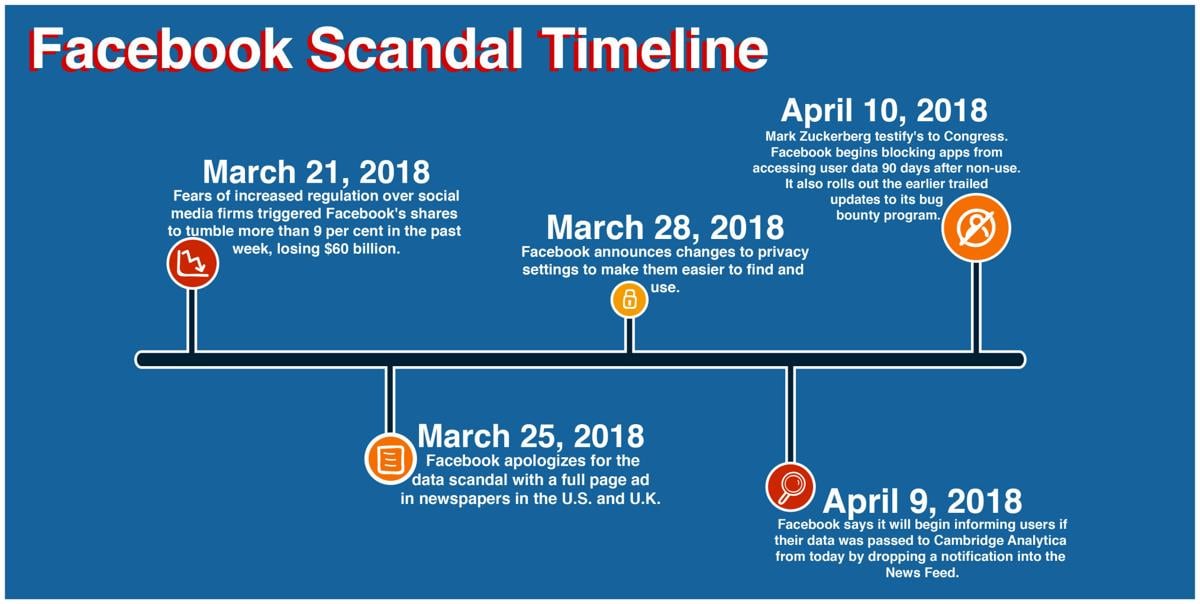
The latest revelations follow a series of scandals including the Cambridge Analytica data harvest, incitement to violence in Myanmar, also known as Burma, evidence of Russian and Iranian meddling in the US elections, and several data-exposing bugs.
These have undermined public confidence in Facebook, led to calls for new regulations and prompted demands for a leadership rethink.
“We have to seriously challenge the claim by Facebook that they are not selling user data,” commented Damian Collins MP, chair of the UK Parliament’s Digital, Culture, Media and Sport Committee.
“They may not be letting people take it away by the bucket load, but they do reward companies with access to data that others are denied, if they place a high value on the business they do together. This is just another form of selling.”
With a little bit of knowledge and a small dose of caution, however, you can enjoy all the benefits of social networking services with few of the risks. Here are some privacy concerns you should watch out for.
A comprehensive plan that evaluates the strategic roles of a variety of communication disciplines and combines these disciplines to provide clarity, consistency , and maximum communication impact.
Simply put an IMC strategy is a machine made up of communications channels cogs like social media, T.V., newspaper, ect. The only way to get the IMC strategy machine to work is if these communications channels cogs work together. As a result of the combined efforts of the communications channels cogs, the IMC strategy machine generates for the audience a clear picture of a brand’s image and messaging as it relates to them.
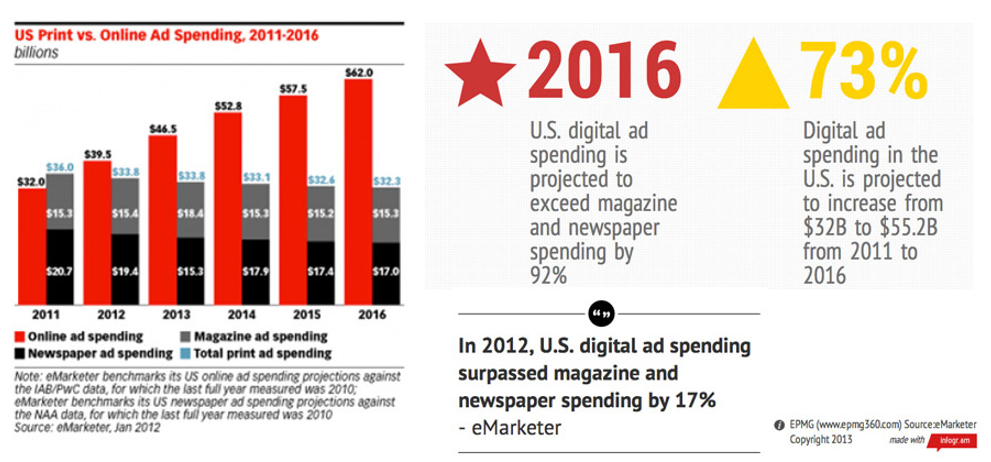
According to the EPMG Source Marketer, digital ad spending in the U.S. is projected to increase from $32B to $55.2B from 2011 to 2016, which means most companies are now shifting towards a greater focus on digital marketing and customers are willing to be given online communication.
Benefits of IMC
Although Integrated Marketing Communications requires a lot of effort it delivers many benefits. It can create competitive advantage, boost sales and profits, while saving money, time and stress.
IMC wraps communications around customers and helps them move through the various stages of the buying process.
IMC also increases profits through increased effectiveness.
IMC saves money as it eliminates duplication in areas such as graphics and photography since they can be shared and used in say, advertising, exhibitions and sales literature.
The “#LikeAGirl” social experiment recruited real women, men, boys and preteen girls and asked them to show what it physically means to run like a girl, throw like a girl, etc. Surprisingly, the prepubescent girls were the only ones who performed these actions confidently and proudly, for they weren’t yet tainted by society’s engraved definition of “like a girl.” Created in partnership with Leo Burnett Chicago, Toronto and London, the online film made its broadcast debut during the Super Bowl, further empowering people of all ages and genders to continue the conversation.
To this day, “#LikeAGirl” has over 90 million views on YouTube and over 150 top awards, and it is the most-watched video in Procter & Gamble’s history. The campaign has won an Emmy, 14 Cannes Lions (including the inaugural Glass Lion, Titanium Lion and a Grand Prix), a D&AD Black Pencil and a Facebook Studio Blue Award by illustrating what it truly means to be “like a girl.” The groundbreaking campaign made a profoundly positive impact on the societal issue of negativity in the life of young girls and on P&G’s brand reputation.
In a nutshell, you need to do integrated marketing to earn profits and remain relevant in the marketplace. An integrated marketing campaign (IMC), therefore, is the only sure way to increased sales, boost revenues and building brand awareness. What's your opinion about IMC? Do you have some interesting examples share with me? Please make comments and communicate with me.
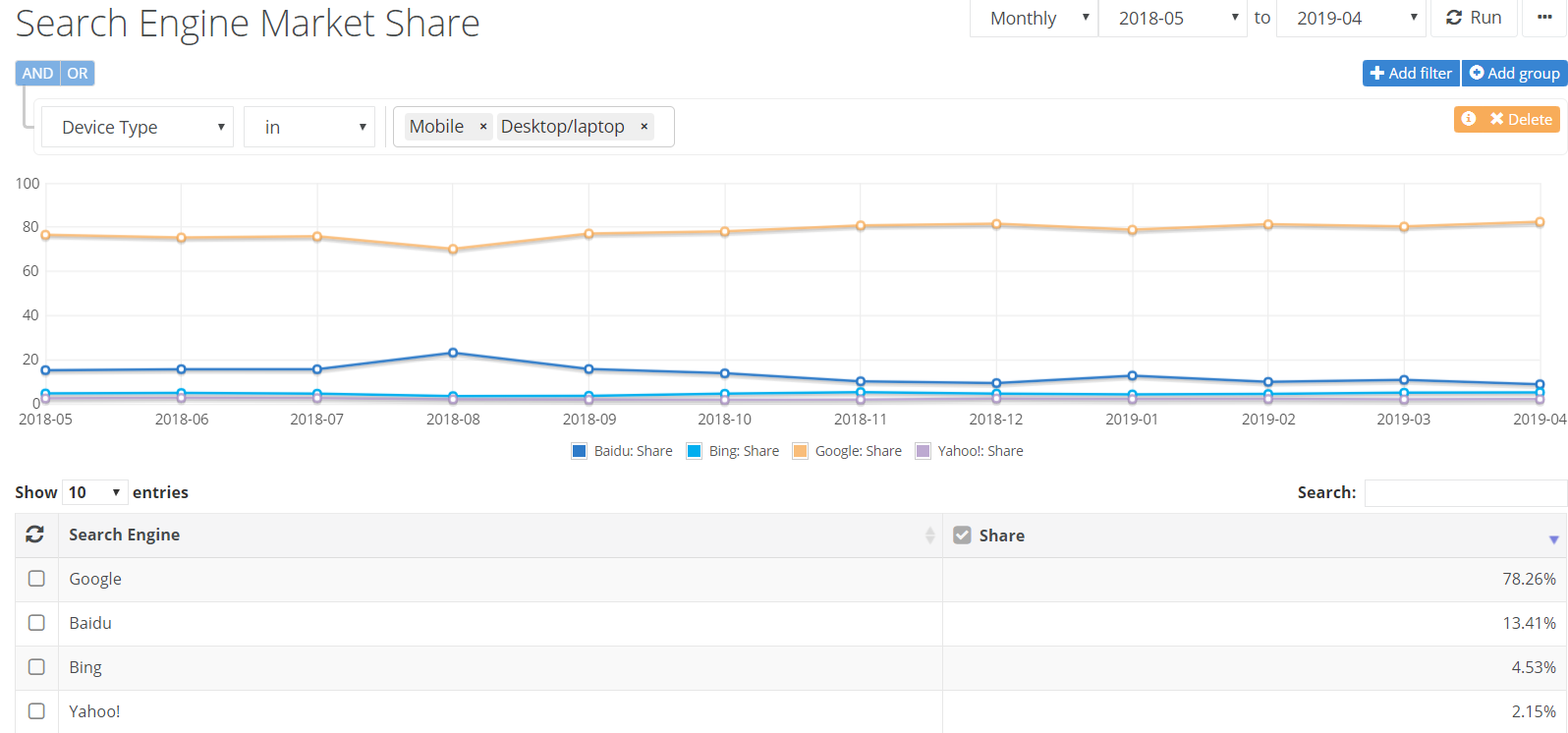
SEO stands for “search engine optimization.” It is the process of getting traffic from the “free,” “organic,” “editorial” or “natural” search results on search engines. According to Market Share Statistics for Internet Technologies, Google, as absolutely leader, is the world’s most popular search engine in the world and Baidu has a big advantage only in China.
Search Engine Market Share
What is SEO?
SEO is not an appropriate strategy for every website, and other Internet marketing strategies can be more effective, such as paid advertising through pay per click (PPC) campaigns, depending on the site operator’s goals. Search engine marketing (SEM) is practice of designing, running and optimizing search engine ad campaigns.Its difference from SEO is most simply depicted as the difference between paid and unpaid priority ranking in search results. A successful Internet marketing campaign may also depend upon building high quality web pages to engage and persuade, setting up analytics programs to enable site owners to measure results, and improving a site’s conversion rate.
A SEM tragedy for Baidu
China has launched an investigation into its leading search engine Baidu Inc. Following the death of a university student who used it to look for treatment for his cancer. Wei Zexi, 21, had turned to Baidu to look for the best place to treat his rare form of cancer and discovered a treatment offered by Second Hospital of Beijing Armed Police Corps, which appeared at the top of his search results. Like other search engines, Baidu gets a large amount of its income from selling advertising, but unlike competitors such as Google, paid-for listings are not clearly marked, reported China Daily.
Xinhua accused Baidu of abusing search engine technology to make money unethically, reported the Wall Street Journal. “Making money by allowing companies to pay for better search placement is to put a good tool in the hands of interest-seekers with bad intentions,” it said. China has launched an investigation into its leading search engine Baidu Inc. Following the death of a university student who used it to look for treatment for his cancer.
What is your opinion about Search engine marketing? Can anything be done about it and is there any way that attacks can be prevented in the future? Please make comments and share your point with me.
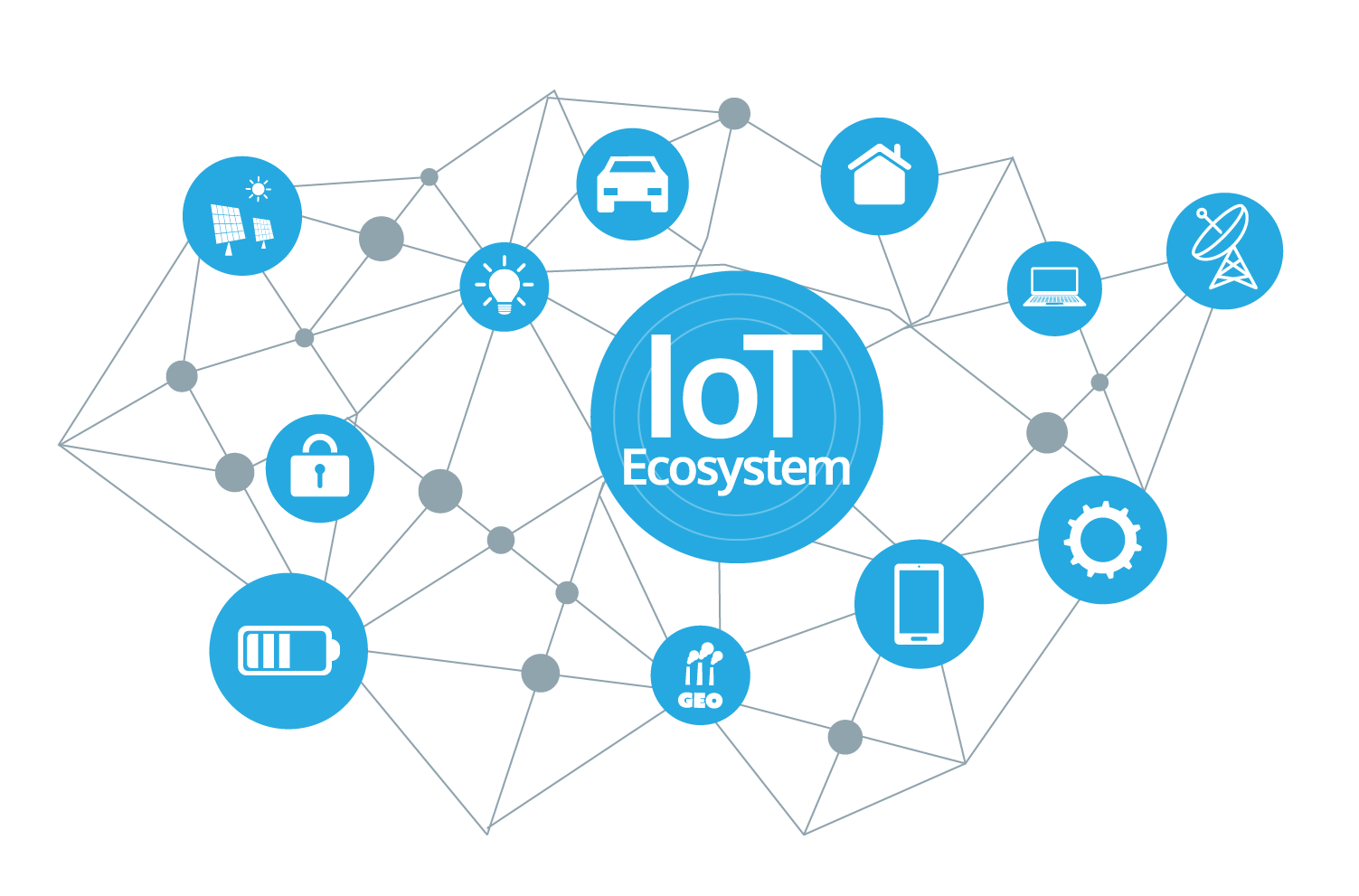
The Internet of things (IoT) is the extension of Internet connectivity into physical devices and everyday objects. Embedded with electronics, Internet connectivity, and other forms of hardware (such as sensors), these devices can communicate and interact with others over the Internet, and they can be remotely monitored and controlled.
According to Internet of Things – Statistics & Facts, the total installed base of Internet of Things (IoT)connected devices is projected to amount to 75.44 billion worldwide by 2025, a fivefold increase in ten years. The IoT, enabled by the already ubiquitous Internet technology, is the next major step in delivering Internet’s promise of making the world a connected place.
The definition of the IoT
The definition of the Internet of things has evolved due to convergence of multiple technologies, real-time analytics, machine learning, commodity sensors, and embedded systems. In the consumer market, IoT technology is most synonymous with products pertaining to the concept of the “smart home”, covering devices and appliances (such as lighting fixtures, thermostats, home security systems and cameras, and other home appliances) that support one or more common ecosystems, and can be controlled via devices associated with that ecosystem, such as smartphones and smart speakers.
smart home
Compatible Google Assistant Smart Home Devices
Since the company unveiled the original Home, we’ve seen plenty more devices with Google Assistant built in. Google has also added integration with a healthy amount of other smart devices, so we’ve broken down some of the best and most popular options for you to choose from.
Whether it’s smart variations of lights, plugs, thermostats or even just streaming devices, we’ve got you covered. And a tip to keep in mind – you can spot a ‘Works with the Google Assistant’ badge to determine which products work with Google Home.
Below, we’ll deep dive into some compatible Google Assistant smart home devices.
Philips Hue
Perhaps the best known smart lighting system out there, there’s no better place to start this list than with Philips Hue. The Hue ecosystem is continually growing with many different kits and lights to make your place all fancy and colourful. And once you have a colourful ensemble of bulbs lighting your way, you can switch on, dim, brighten and change colour all with the Google Assistant.
Wi-Fi smart plugs
TP-Link’s Wi-Fi smart plugs, like the HS 110, will do exactly what you’d expect. You’ll get energy monitoring and remote access to turn on and off devices, scheduling, and away mode, which turns off all your devices when you leave.And of course, you’ll have Google Assistant support to turn devices on and off with the power of your voice.
In all, we are told that IoT has changed our life, which is beneficial to us and provides us convenience and comfort. However, the IoT concept has faced prominent criticism, especially in regards to privacy and security concerns related to these devices and their intention of pervasive presence. What is your opinion about the IoT? Do you still have some concerns about IoT technology? Please make some comments and communication with me.
Experienced marketers will often dismiss any new, hot app as a flash in the pan – just because a new platform gets the spotlight at SXSW, that doesn’t mean that it’ll be an useful tool for marketers’ long term management.
There is plenty of precedent for this – while Snapchat, for example, was initially announced as the next big thing for marketers hoping to reach young audiences. However, most of initial brand adopters have given up it because of its difficult-to-measure ROI, usability issues and high advertising costs. But TikTok, a short video app initially launched by Chinese company Bytedance in September 2016, and beloved by teenagers (and younger) around the globe, may well be worth a second look.
A recent New York Times report entitled “How TikTok is Rewriting the World” explored some of the ways the app stands out from other platforms, notably through its calls-to-action for digital denizens to become content creators, and its addictive entertainment value for extremely young audiences.
What is TikTok?
TikTok is an app for making and sharing short videos. The videos are tall, not square, like on Snapchat or Instagram’s stories, but you navigate through videos by scrolling up and down, like a feed, not by tapping or swiping side to side. TikTok is, however, a free-for-all. It’s easy to make a video on TikTok, not just because of the tools it gives users, but because of extensive reasons and prompts it provides for you. You can select from an enormous range of sounds, from popular song clips to short moments from TV shows, YouTube videos or other TikToks. You can join a dare-like challenge, or participate in a dance meme, or make a joke. Or you can make fun of all of these things. And it’s grown, fast – while TikTok, which is known as ‘Douyin’ in China, has more than 300 million monthly active users, and 150 daily actives, in China, it’s also now added more than 26 MAUs in the US, who are spending, on average, 46 minutes per day in the app.
So, what content is TikTok’s burgeoning young audience most interested in? In a word: Fun!
Hashtag challenges and lip synch contests have become the platform’s vernacular, and Bytedance has put a heavy focus on artificial intelligence, meaning that the algorithm learns quickly and is custom-tailored to each users’ individual tastes. This enables TikTok to churn out an almost endless stream of interactive content every time a user logs in.
By nature, the platform is extremely interactive. TikTok invites content consumers to join in the fun and create their own videos rather than taking a backseat (although sitting back to watch is perfectly acceptable). There also isn’t much pressure for users to build a large following – at least not in the same way that Facebook, Instagram and Twitter have quantified influence.
Why TikTok becomes a successful mobile app?
Solve a problem • The app is used for passing the time and interacting with others. purpose
Easy to Use • The app is easy to use, which is available for different age groups.
Update Frequently • To keep consumers engaged, the app updates weekly and introduce new features for users.
Built for Native Platform • The app provides a platform that users can share interesting things with friends and family.
Kind to Phone Battery • The app has consumed little battery power.
Free • Looks like fee has won. The app profits from advertising sponsors and provides value-added services.
After reading my blog, do you think TikTok is a successful mobile app? If you have some different idea, please don't hesitate to make comments and contact me.
Word-of-mouth marketing , also called word of mouth advertising, differs from naturally occurring word of mouth, in that it is actively influenced or encouraged by organizations (e.g. ‘seeding’ a message in a networks rewarding regular consumers to engage in WOM, employing WOM ‘agents’).
While it is difficult to truly control WOM, research has shown that there are three generic avenues to ‘manage’ WOM for the purpose of WOMM:
Build a strong WOM foundation (e.g. sufficient levels of satisfaction, trust and commitment),
Indirect WOMM management which implies that managers only have a moderate amount of control (e.g. controversial advertising, teaser campaigns, customer membership clubs),
Direct WOMM management, which has higher levels of control (e.g. paid WOM ‘agents’, “friend get friend” schemes). Pro-consumer WOM has been suggested as a counterweight to commercially motivated word of mouth.
Why is WOM Marketing Important?
Consumers trust their friends. This is why word of mouth marketing is the most valuable source of marketing.
According to a Nielsen study, 92% of consumers believe suggestions from friends and family more than they do advertising – this stat alone solidified the word of mouth use case.
WOM also doesn’t stop after just one interaction. One person will tell another, and that person will someone else, then that person will continue the chain and spread the word further, making it a great vehicle for exposure and distribution – if used well.
Of course, the same is true in reverse – negative news can spread just as fast, but the essential benefit of WOM in the connected era is personal endorsement, which is not only more readily available, but is seen as significantly more valuable to modern consumers.
How to Use WOMM?
Connect with consumers, as opposed to ‘collecting’ them.
Sure you might have millions of social media followers, but you have to establish connection with those users to generate any tangible benefit. If your audience is not interested in you, they’re not likely to help you grow. They’re collecting dust and clogging your real fan base.
You want real fans and supporters. The more passionate your fans are about you, the more likely they’ll share you. As noted, the passing of information through word of mouth is powerful in influencing others, it has a way of reaching parties that it might not have been able to do otherwise.
This is even more relevant when considering the rise of ad blockers and increasing ad blindness, particularly on digital platforms.
Here are four tips to help maximize your WOM potential.
1. Make Yourself Interesting
Think of it as social currency – share what makes you look fun/good/interesting. This entices sharing.
Consumers feel more confident in the information they’re sharing when they’re contributing something that’s worth talking about.
For example, research has shown that Facebook users are more likely to share content that educates their network, and/or makes them look good and reinforces a certain image of themselves. You can tap into such behavioral trends to benefit your messaging.
2. Create a Trigger
Can you tie yourself into other things that your consumers do or use?
“You can design products that are triggered by the environment, and create new triggers by linking your products and ideas to prevalent cues within that environment”.
If people remember you, they’ll continue to talk about you. Sounds like a great way to start a successful referral program.
3. Provide value
If you establish yourself with a few people, they’ll share the experience with friends – you may not remember the last time you shared a mediocre restaurant or service with someone, but you’ll no doubt be able to remember an amazing experience or event.
For example, you might have gone to a great Japanese restaurant and had a good night out. You know a co-worker who loves sushi – you relate your experience to them
Sharing valuable information makes you valuable. Great, unique customer experiences, along with having a great product, can help increase your value, and thus, your WOM potential.
4. Provoke Emotion
Creating emotion goes hand in hand with creating value. People are more likely to share something that promotes high arousal, and people are more likely to share experiences in which they had some sort of emotion towards.
Word of Mouth Examples
Pinterest
Pinterest
Pinterest thrives on user-generated content. The company depends on users to create vision boards and actively recruit more “pinners” into the fold. So, how did Pinterest go from 3000 followers in early 2010 to over 200 million in 2018?null
Founder Ben Silbermann turned to the site’s small, but passionate, audience to plan a growth campaign. The site’s loyal group of users really loved the product, so Silbermann organized meetups with them to get feedback. Connecting one-on-one showed users the Pinterest team was serious about building a better site and a bigger community.
Pinterest used this gateway to run one of the most successful referral programs of all time. The “Pin It Forward” campaign encouraged users to create pinboards and invite their friends to do the same. Striking visuals provided inspiration for people to join and offered a preview of exciting projects they could try.
Casper Mattress Company
Casper Mattress Company
When a product is significantly different or more expensive than the industry standard, it takes some imagination to reach customers. Casper broke into the crowded mattress market with a $1000 flagship product by making an irresistible offer. Take a mattress home and sleep on it for 100 days before deciding whether to return it.
Who could walk away from such a tempting offer when it included fast online ordering and home delivery? Providing a long trial period also eliminated the biggest fears about buying a high-end mattress.
Customers had plenty of time to test the mattress for comfort and durability. More importantly, customers had a tangible product in their homes that they could use and show to others.
At the same time, Casper circulated detailed ads and reviews on social media sites. Altogether, the strategy generated substantial buzz that helped the company carve a niche in a competitive arena.
These are just some of the critical elements and considerations of word of mouth marketing. Used well, it can be a powerful way to spread your brand messaging – and with users now able to communicate faster and more broadly than ever before, it’s an important aspect to consider in any outreach process. If you are interested in WMM, please share your own idea or some great examples with me.
Activities based on photo, like tweeting, may be partly managed by people’s negative perceptions of their own image.
Read more self-congratulatory messages on social media, and you will feel better about yourself.
There are millions of people who are doing the same thing when you’ checking Twitter or Instagram. But have you ever wondered how the pictures of others’ bodies (whether it is a friend on vacation or a celebrity selfie at the gym), and can it affect your own thought of yourselves?
In recent years, it has been repeatedly put forward that the the refined photos of celebrities or skinny models published by the mainstream media set an unrealistic standard of “beauty” for us. With all these famous names dominating the social media headlines, it is natural way to think that social media has detrimental effect on your body image.
According to The “Yellow Social Media ReportActions“, females are more frequent users of social media than males and frequency decreases with age. The under 30s young females are checking in most of all averaging 48 visits weekly.
In a study of 227 female college students, participants said they rated themselves negatively when they compared their looks to peers and celebrities, but not when they compared them to family members. The people most associated with body image anxiety were people of the same age who didn’t know each other.
“If people compare their appearance to people on Instagram or any social media platform, they tend to rate themselves negatively,” said by Jasmine Fardouly, a postdoctoral fellow at Macquarie university in Sydney. He explained that people only show one side of their lives online. If you know someone well, you know that they only bring out the best in themselves. But if you just know them, you can’t know anything else about them, you can’t make that inference.
In all, whether the social media will change the way you think about how you look depends on how to make use of the social media. If it is utilized reasonably, it will help to encourage a positive life habit and make us take more care of self health status.
What do you think about the advent of the social media? Does it make your life more positive and inspire you to have a more meaningful life? Or does it cause that you waste time and become negative because of bad comments? Please make comments on my blog and share your opinion with me.
















 TANG XIAOTING